


Introduction
The world continues to witness a profound crisis unfolding in many places. Afghanistan—a situation marked by unprecedented upheaval and human suffering. The images pouring out from the region remain haunting, capturing scenes of chaos, displacement, and despair that resonate across the globe and more.
Since the dramatic withdrawal of international forces in 2021, Afghanistan has experienced rapid political shifts, economic decline, and social upheaval. These events have not only reshaped the country’s landscape but also challenged global perceptions and responses. The fall of the Afghan government and the return of the Taliban to power have ignited widespread concern about human rights, security, and stability in the region.
This paper seeks to explore the complex and often overlooked facets of Afghanistan’s ongoing crisis. By examining the political, social, and cultural dimensions of this tumultuous period, we aim to shed light on the deeper issues at play and provide a comprehensive understanding of Afghanistan’s current reality.
1) The Social and Political History of Afghanistan
The region now called Afghanistan was created through the hurried intervention of Great Britain to prevent the further southward expansion of Tsarist Russia into the Indian Peninsula and to thwart broader invasions into regions of their interests.
The conflicts among great powers had already begun in the late 17th century when the Russo-Persian War ended with Persia’s defeat.
Following this defeat, there were significant and irreparable losses, as the Turkic-speaking Shah of Persia, Fath Ali Shah Qajar, and his envoys signed the Ghulistan Treaty and later the Turkmenchay Treaty, ceding large parts of Central Asia and the Caucasus to Russia. (See Elton L. Daniel, ‘Golestān Treaty,’ Encyclopædia Iranica, 2011)
The geopolitical shock and instability caused by the Russians on one side and the British on the other led to invasions in regions near the Persian Gulf. Thus, the Anglo-Persian War ended with the Treaty of Paris in 1857. Persia then ceded Herat to the British, laying the foundations for what was envisioned as the Afghanistan of their dreams. (See Steven R. Ward, A Military History of Iran and Its Armed Forces, p. 80, 2014)
1.2 The Significant Role of Herat and Its Connection to Modern Political Developments
Herat, in ancient Persian, ‘Hera,’ is considered part of the glorious Khorasan region of present-day Iran. It connects the East and West along the famous Silk Road. Alexander the Great encountered difficulties in Herat but ultimately conquered it. After his conquest, a new part called Arian Alexandria was added to the city centre.
The Satrapy system, ancient in origin, was not abolished by Alexander’s successors, but reforms were made regarding heavy taxation to prevent conflicts among the populace. This marked the beginning of the prosperity of these regions, until the advent of Islam, followed by the arrival of the Turks.
The local population speaks Dari, an ancient dialect of Persian. The region appears to have a significant Shia Muslim population, and around 30% of the inhabitants are Turkic. It is perhaps no coincidence that the first Islamic movements spreading political ideologies and controlling the political landscape originated in Herat. These movements promote a community-based ideology rooted in Islamic law.
During the Soviet-Afghan War, the subsequent civil war, and battles against the communist government of Najeebullah, the Jamaat-e-Islami was one of the strongest Mujahideen groups fighting in the country. (See Saikal, Amin, Modern Afghanistan: A History of Struggle and Survival, London, I.B. Tauris, p. 214; Roy, Olivier, Islam and Resistance in Afghanistan, Cambridge, Cambridge University Press, pp. 76–129, 1992)
1.3 The Troubled City of Kabul: From Glory to Modern Bloody Conflicts
Kabul, known in ancient Greek as ‘Kubhā,’ attracted the attention of the Durrani dynasty, which ruled in the late 17th century. They decided to move their administration from Kandahar to Kabul, which borders present-day Pakistan.
Most recognized leaders and rulers of Afghanistan have come from the Pashtun ethnic group. Persians and Hazaras, of Persian origin, rarely held decision-making power or faced severe discrimination.
1.4 British Claims and Afghanistan in the 18th Century
The political history of present-day Afghanistan begins with the Afghani Pashtuns, who, beyond their considerable power within Afghanistan, also hold the key to power in Pakistan. They maintained relations with Great Britain after Indian independence, through religious ties, contrasting with the Hindu-majority India.
The Ottoman Empire of the time refused to recognize any authority outside itself. Ashraf Afghan Pashtun learned of the death of Shah Sultan Hosayn of the Safavid Persia and proposed to become the leader of the Persian army to teach the Turks a lesson, leading to the Ottoman defeat in 1727. Ashraf collected remnants of the Turkish army and sent a letter back to Istanbul. The Afghan historian Mohammad Hashem Asef writes:
“We are brothers with the Turks, we are not at war with you, we seek peace with you, and we do not claim your goods.” (Rostam Al-Tavarikh, Mohammad Hashem Asef, p. 330)
Under these circumstances, the Ottoman Sultan recognized the Huttakid dynasty’s rule over Afghan territories in 1728.
1.5 Major Developments of the 18th and 19th Centuries and Their Resurgence Today
The fall of the Huttakid dynasty began with a bloody war between the British and the Afghan world. The conflicts had roots in their complex political relations with Tsarist Russia. Ashraf Afghan had even ceded some parts of Persia back to the Russians.
The British found a trusted leader named Dost Muhammad Khan, who eventually led to the invasion and occupation of Bukhara in neighboring Uzbekistan. In 1847, Shir Ali Khan sought Russian support but was only advised to reconcile with the British. According to sources, Shir Ali died helpless in Mazar-i-Sharif due to these events. (See Afghanistan in the Last Five Centuries, Mohammad Siddiq Farhang, Erfan Publishing Institute, Tehran, 2008, pp. 170–171)
In 1879, British forces and Afghans signed the Gandamak Treaty, under which Britain would control Afghanistan’s foreign affairs and occupy 50% of its territory. This period also saw the signing of the Durand Line, which Pakistan inherited in 1919. (See The Durand Line, U.S. Library of Congress, archived 2019)
This caused lasting resentment in Pakistan, as it divided the Pashtun tribes and severed communication with relatives. The next British ruler in Afghanistan was someone called Abdul Rahman Khan, notorious for his brutality, massacring 63% of the Hazara population—that is, about 600,000 people—who opposed progress and sought absolute submission.
Afghans rebelled again against the British in 1915-1916, with significant economic costs—around 16 million pounds—and the loss of 2,000 soldiers. This led Britain to recognize Afghanistan’s independence in 1919 under Amanullah Khan, who, along with his wife, contributed to infrastructure development. They were Pashtun and promoted mandatory education for women.
During World War I, Afghanistan remained neutral. Amanullah traveled to France, where he was received with great honor, even staying in Napoleon’s room. Germany gifted him an airplane, and he visited Russia to observe heavy industry. Turkey welcomed him as a leader fighting against major powers.
During World War II and the Cold War, Afghanistan again maintained neutrality. The last king, Zahir Shah, contemplated creating a state for the Pashtuns, but the British had unfavorable opinions of him.
1.6 Afghanistan in the Soviet Era
Historically, relations with the Soviet Union developed gradually. After World War II, the US entered the region, offering infrastructure to gain influence. Communist ideas spread, and the uprising of Shia Afghans, known as Mujahideen, began. The brutal actions of Soviet forces against religious citizens fueled further hatred. Tens of thousands were killed, and over 8 million became refugees. The Afghan Communist leader was near the Tajikistan border, with neighboring countries—Pakistan, Tajikistan-Russia, and Iran—supporting their respective ethnic groups and traditions.
Epilogue
The fate of a country with 40 million people, marked by intense historical tensions and inherited conflicts, cannot be separated from its people, their collective life, existential outlook, expressions, and ways. All that has emerged or will emerge brings new phenomena. The Afghan issue remains difficult to resolve and is already complicating internal and border management in the broader region.
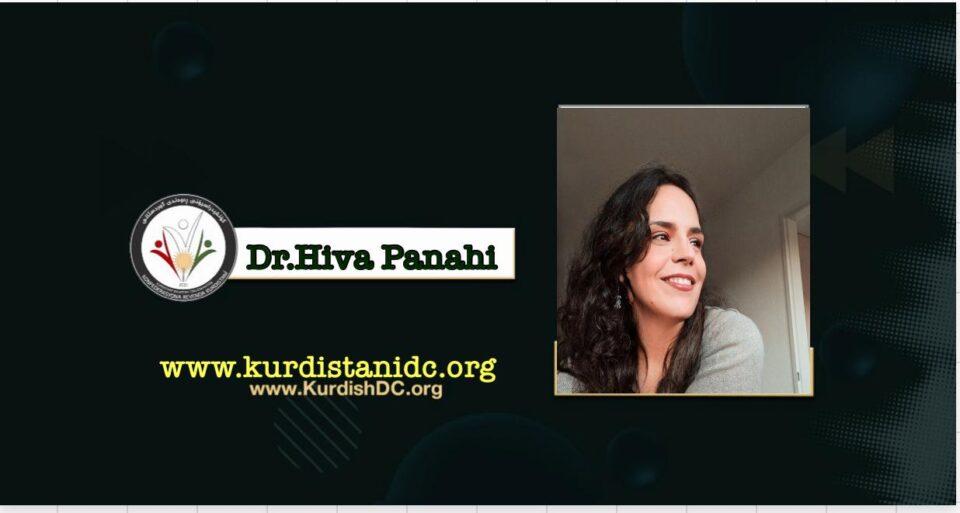
Dr. Hiva Panahi holds a Ph.D. in Political and Social Sciences from the Panteion University of Athens, where she specialized in General Sociology and comparative studies of the political and cultural systems of neighbouring nations of the Hellenic world, Kurds, Persian. Her work has earned her recognition as an esteemed author on the international stage.